
Showing posts with label water. Show all posts
Showing posts with label water. Show all posts
Thursday, 10 November 2011

Wednesday, 12 October 2011
Animation test
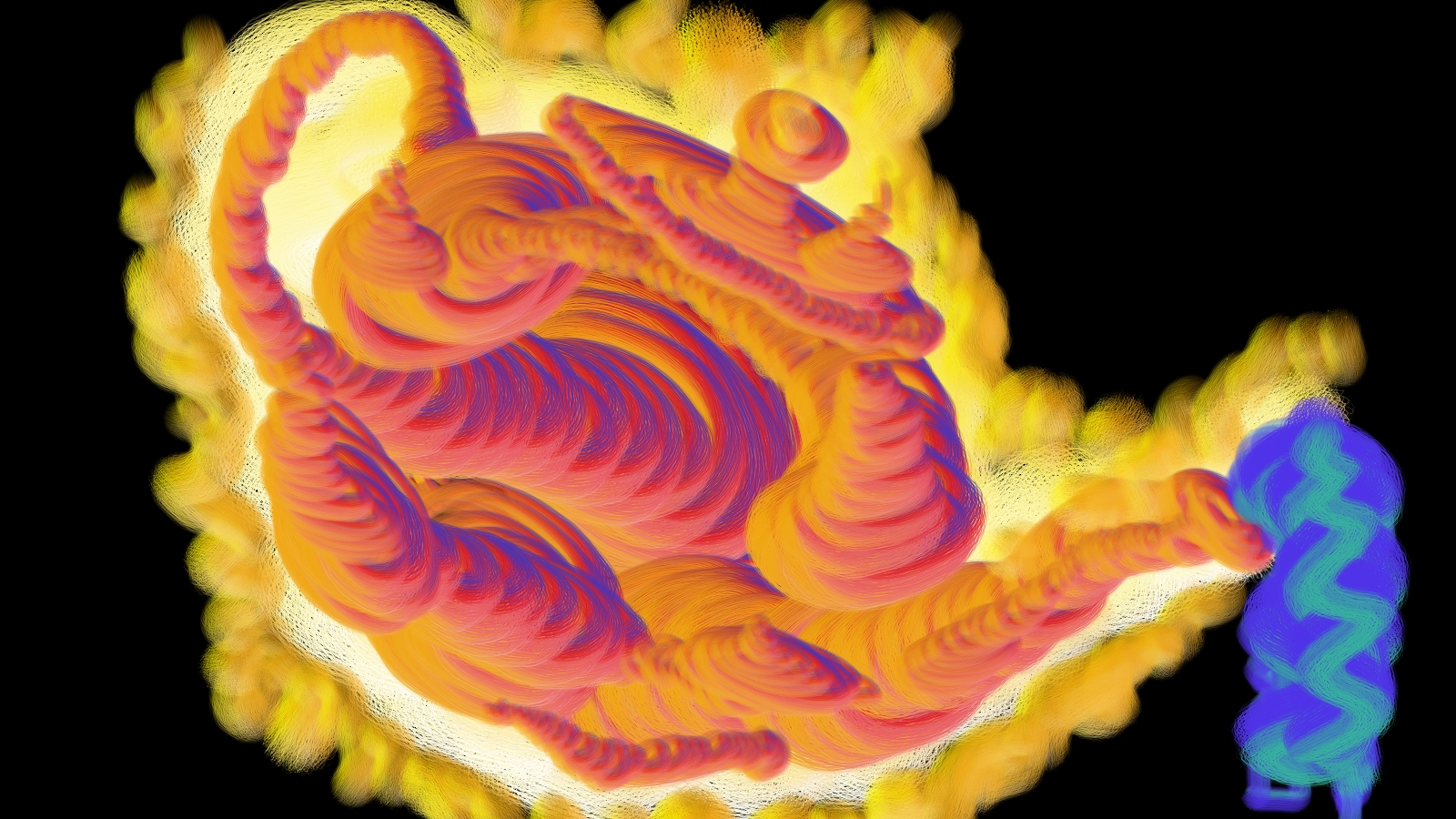
Here is an quick animation I did of a water drop in order to test whether the software Painter could be used in the way in which I anticipated, overall I am happy with the results. The line test was done using Animate animating on 2s.
Line Test
Painted:
Line Test
Painted:
Friday, 2 September 2011


Poseidon (Greek: Ποσειδῶν) was the god of the sea, and, as "Earth-Shaker," of earthquakes in Greek mythology. The name of the sea-god Nethuns in Etruscan was adopted in Latin for Neptune in Roman mythology: both were sea gods analogous to Poseidon. Linear B tablets show that Poseidon was venerated at Pylos and Thebes in pre-Olympian Bronze Age Greece, but he was integrated into the Olympian gods as the brother of Zeus and Hades. Poseidon has many children. There is a Homeric hymn to Poseidon, who was the protector of many Hellenic cities, although he lost the contest for Athens to Athena.
[http://en.wikipedia.org/wiki/Neptune_%28mythology%29]


Neptune (Latin: Neptūnus) was the god of water and the sea in Roman mythology and religion. He is analogous with, but not identical to, the Greek god Poseidon. In the Greek-influenced tradition, Neptune was the brother of Jupiter and Pluto, each of them presiding over one of the three realms of the universe, Heaven, Earth and the Netherworld. Depictions of Neptune in Roman mosaics, especially those of North Africa, are influenced by Hellenistic conventions.
Unlike the Greek Oceanus, titan of the world-ocean, Neptune was associated as well with fresh water. Georges Dumézil suggested that for Latins, who were not a seafaring people, the primary identification of Neptune was with freshwater springs. Like Poseidon, Neptune was worshipped by the Romans also as a god of horses, under the name Neptunus Equester, a patron of horse-racing.
[http://en.wikipedia.org/wiki/Poseidon]
Mind Game & Maasaki Yuasa- a huge inspiration
If you are just scrolling and don't have the time to look at everything on this blog STOP AND WATCH THIS! if you have seen it already, watch it again! because it is just that good!
Climbing out of the Whale- a tribute to will full spirit!
wasn't that amazing?
Climbing out of the Whale- a tribute to will full spirit!
wasn't that amazing?
Wednesday, 31 August 2011


Masaru Emoto

Masaru Emoto (江本 勝 Emoto Masaru?, born July 22, 1943) is a Japanese author and entrepreneur known for his claims that human consciousness has an effect on the molecular structure of water. Emoto's hypothesis has evolved over the years of his research. Initially Dr. Emoto claimed that high-quality water forms beautiful and intricate crystals, while low-quality water has difficulty forming crystals. According to Dr. Emoto, an ice crystal of distilled water exhibits a basic hexagonal structure with no intricate branching. Emoto claims that positive changes to water crystals can be achieved through prayer, music or by attaching written words to a container of water.
Since 1999 Emoto has published several volumes of a work titled Messages from Water, which contains photographs of water crystals next to essays and "words of intent."
In addition to his books, Emoto also sells various water products from his websites and catalogs, which are purported to have healing properties derived from his research and experiments.
[en.wikipedia.org/wiki/Masaru_Emoto]
Water-The great Mystery
Documentary about the amazing qualities of water; from its memory retention to its reactions to human emotions.
[Please follow the link to see other parts on youtube]
[Please follow the link to see other parts on youtube]
Thursday, 4 August 2011
9

another representation of higher conciousness symbolised as the water drop.
The nine consciousnesses can be thought of as different layers of consciousness which are constantly operating together to create our lives. The Sanskrit word vijnāna, which is translated as consciousness, includes a wide range of activities, including sensation, cognition and conscious thought. The first five of these consciousnesses are the familiar senses of sight, hearing, smell, taste and touch. The sixth consciousness is the function that integrates and processes the various sensory data to form an overall picture or thought, identifying what it is that our five senses are communicating to us. It is primarily with these six functions of life that we perform our daily activities.
Buddhism posits that our thoughts, words and deeds invariably create an imprint in the deep layers of the eighth consciousness. This is what Buddhists refer to as karma. The eighth consciousness is therefore sometimes referred to as the karmic storehouse--the place where these karmic "seeds" are "stored." These seeds or latent energy can be either positive or negative; the eighth consciousness remains neutral and equally receptive to either type of karmic imprinting. The energy becomes manifest when conditions are ripe. Positive latent causes can become manifest as both positive effects in one's life and as positive psychological functions such as trust, nonviolence, self-control, compassion and wisdom. Negative latent causes can manifest as various forms of delusion and destructive behavior and give rise to suffering for ourselves and others.
While the image of a storehouse is helpful, a truer image may be that of a raging torrent of karmic energy. This energy is constantly moving through and shaping our lives and experience. Our resultant thoughts and actions are then fed back into this karmic flow. The quality of the karmic flow is what makes each of us distinct beings--our unique selves. The flow of energy is constantly changing, but, like a river, it maintains an identity and consistency even through successive cycles of life and death. It is this aspect of fluidity, this lack of fixity, that opens the possibility to transforming the content of the eighth consciousness. This is why karma, properly understood, is different from an unchanging or unavoidable destiny.
The question, therefore, is how we increase the balance of positive karma. This is the basis for various forms of Buddhist practice that seek to imprint positive causes in our lives. When caught up in a cycle of negative cause and effect, however, it is difficult to avoid making further negative causes, and it is here that we turn to the most fundamental layer of consciousness, the ninth or amala consciousness.
This can be thought of as the life of the cosmos itself; it is also referred to as the fundamentally pure consciousness. Unstained by the workings of karma, this consciousness represents our true, eternal self. The revolutionary aspect of Nichiren Buddhism is that it seeks to directly bring forth the energy of this consciousness--the enlightened nature of the Buddha--thus purifying the other, more superficial layers of consciousness. The great power of the ninth consciousness welling forth changes even entrenched patterns of negative karma in the eighth consciousness. Because the eighth consciousness transcends the boundaries of the individual, merging with the latent energy of one's family, one's ethnic group, and also with that of animals and plants, a positive change in this karmic energy becomes a "cogwheel" for change in the lives of others. As SGI President Ikeda writes, "When we activate this fundamentally pure consciousness, the energy of all life's good and evil karma is directed toward value creation; and the mind or consciousness . . . of humankind is infused with the life current of compassion and wisdom." Nichiren identified the practice of chanting the phrase Nam-myoho-renge-kyo as the basic means for activating the ninth consciousness in our lives.
As the layers of consciousness are transformed, they each give rise to unique forms of wisdom. The wisdom inherent in the eighth consciousness allows us to perceive ourselves, our experience and other phenomena with perfect clarity and to profoundly appreciate the interconnectedness and interdependence of all things. As the deep-rooted delusions of the seventh consciousness are transformed, an individual is enabled to overcome the fear of death, as well as the aggression and violence that spring from this fear. A wisdom arises which enables us to perceive the fundamental equality of all living beings and to deal with them on an unchanging basis of respect. It is this type of transformation and wisdom that is sorely required in our world today.
[http://www.sgiquarterly.org/buddhism2004Apr-1.html]
Brahman

Impact of a drop of water in water, a common analogy for Brahman and the Ātman
In Hinduism, Brahman (ब्रह्मन् bráhman) is the one supreme, universal Spirit that is the origin and support of the phenomenal universe. Brahman is sometimes referred to as the Absolute or Godhead which is the Divine Ground of all being. Brahman is conceived as personal ("with qualities"), impersonal ("without qualities") and supreme depending on the philosophical school.
The sages of the Upanishads teach that Brahman is the ultimate essence of material phenomena (including the original identity of the human self) that cannot be seen or heard but whose nature can be known through self-knowledge (atma jnana). According to Advaita doctrine, a liberated human being (jivanmukta) has realised brahman as his or her own true self.
The Mundaka Upanishad says:
Auṃ - That supreme Brahman is infinite, and this conditioned Brahman is infinite. The infinite proceeds from infinite. If you subtract the infinite from the infinite, the infinite remains alone.
'When we say that we are Brahman, it means that we are integral part of Brahma. It is like, if we are a drop of water in a sea, we can say that we are ocean. There is no difference between ocean and a drop of ocean. Brahma is also called Super-Soul (Paramtaman) as all the Souls of the Universe are part of it and it consists of all souls of the universe. '
Subscribe to:
Posts (Atom)